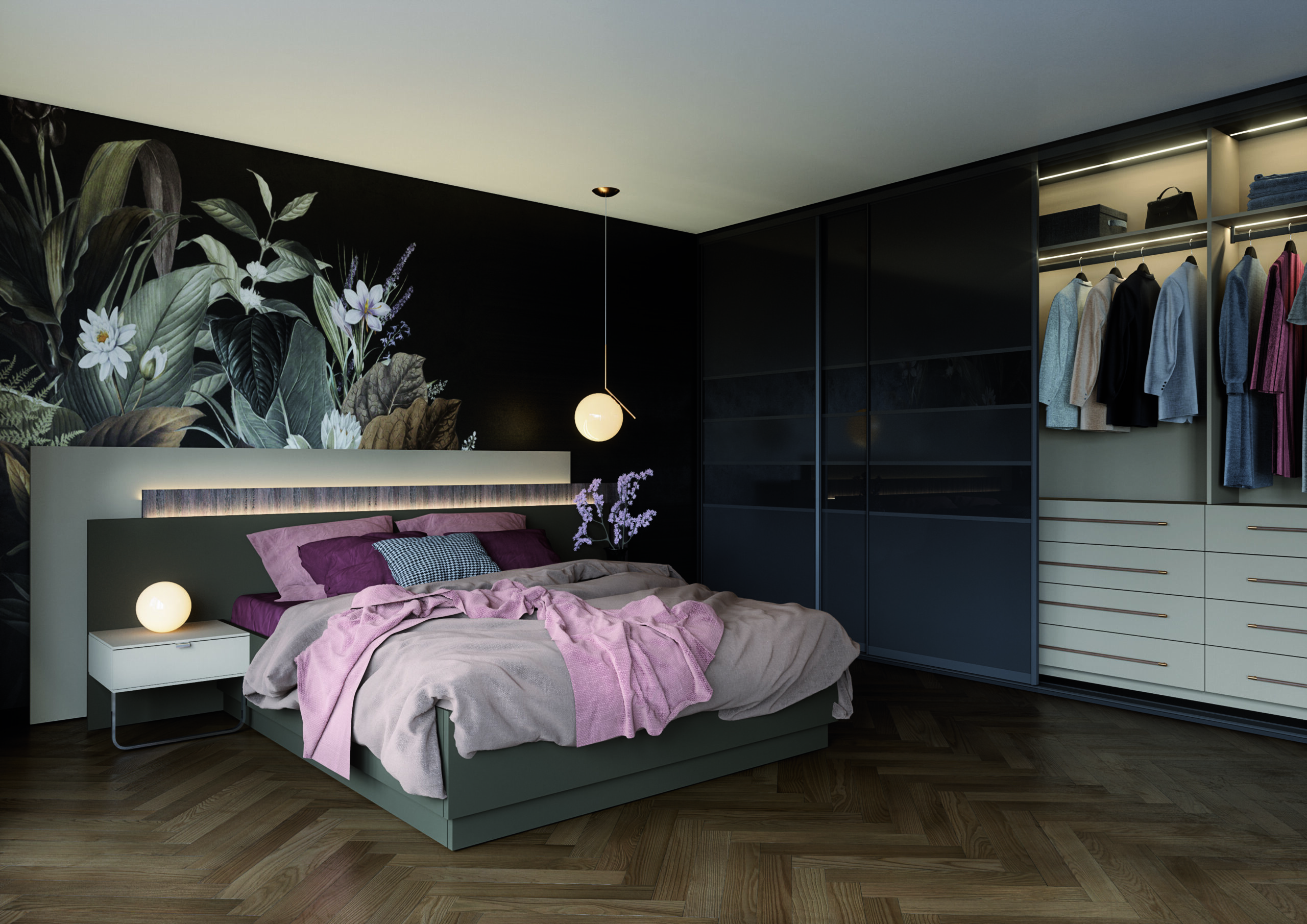

Small bedrooms can feel cramped quickly, especially when storage is an afterthought. The good news is that layout does most of the heavy lifting. With the right wardrobe design, the room can feel calmer, easier to move around, and a lot more spacious than the floor plan suggests.
Start with Walkways and the Way You Move
Before choosing door styles or finishes, plan how you actually use the room. Where do you stand to get dressed. Where do drawers need to open. Which side do you walk around the bed.
- Keep access clear to the bed and bedside space
- Place drawers where they can open comfortably
- Avoid creating pinch points near doorways
- Use full height storage to reduce the need for extra furniture
Choose Doors That Suit Tight Rooms
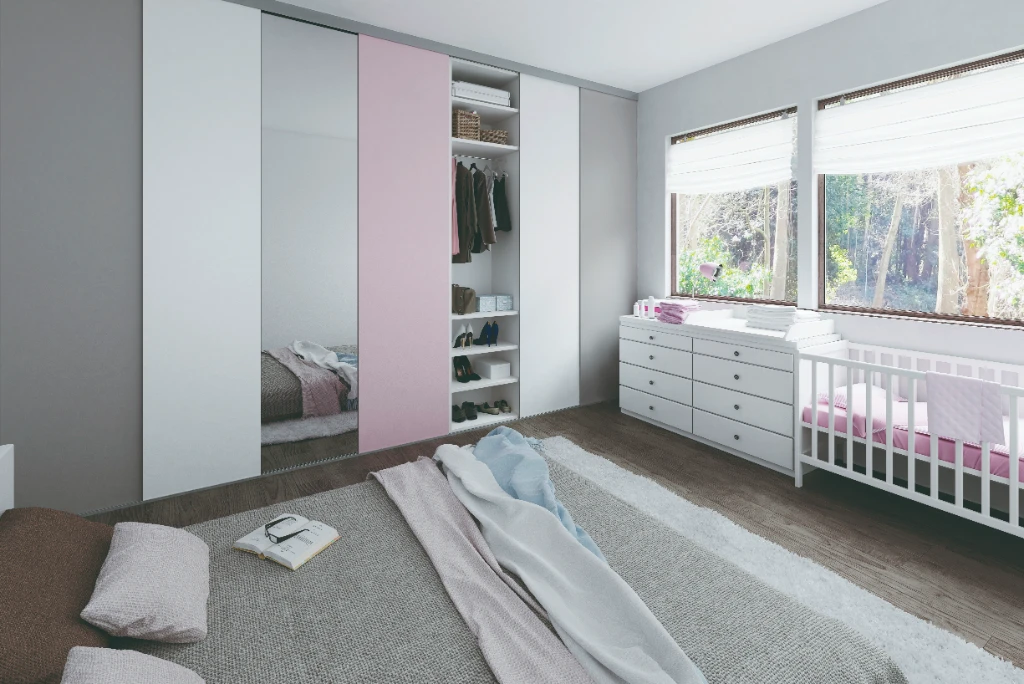
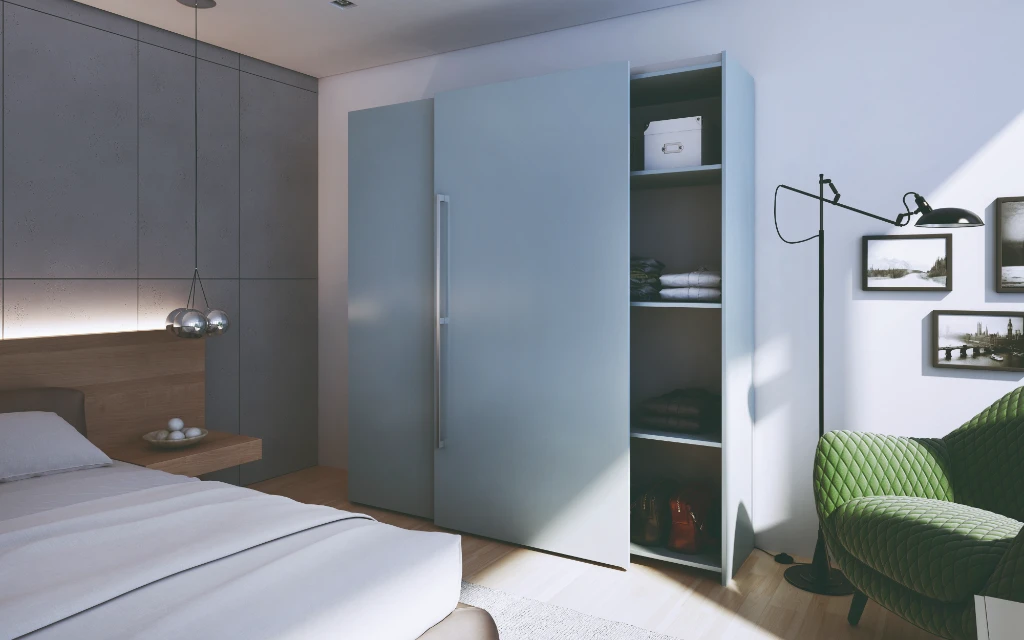
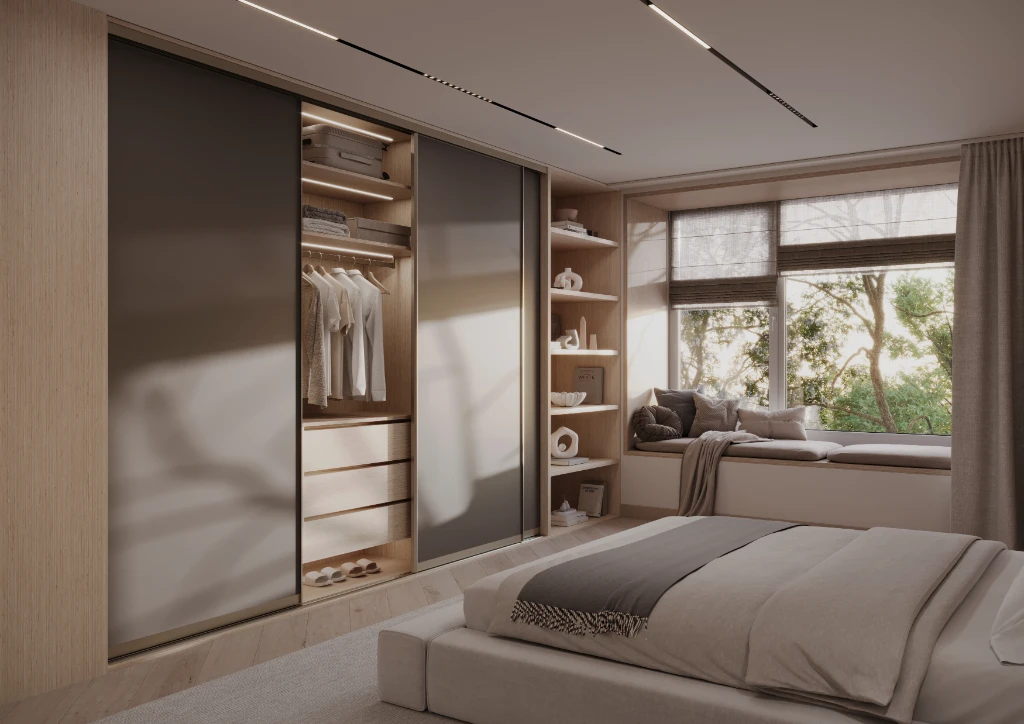
In small bedrooms, door swing can become the problem. Sliding doors often suit tighter layouts because you are not fighting with open doors and furniture.
- Sliding doors help where floor space is limited
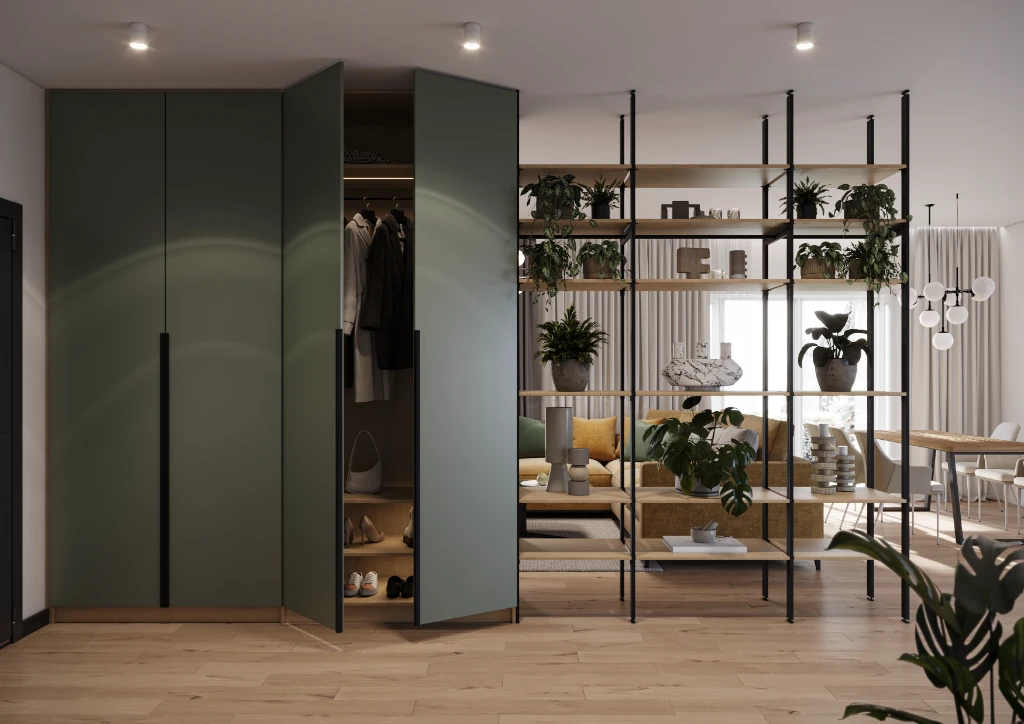
- Hinged doors can work if there is clear swing space
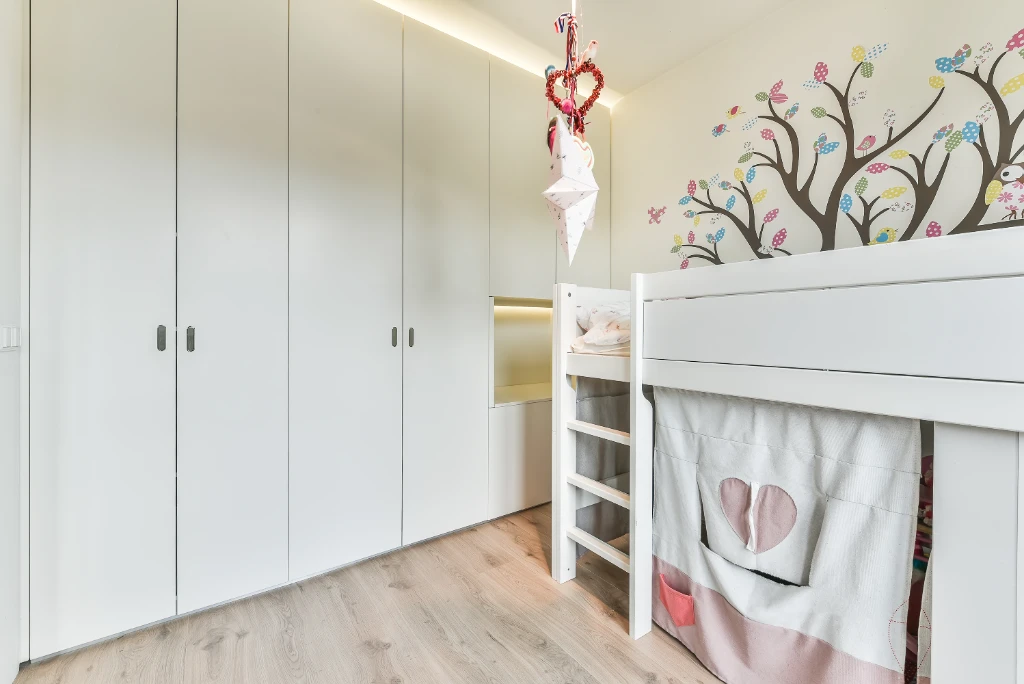
- A cleaner front often makes the whole room feel calmer
Use Mirrors and Light to Open the Room Up
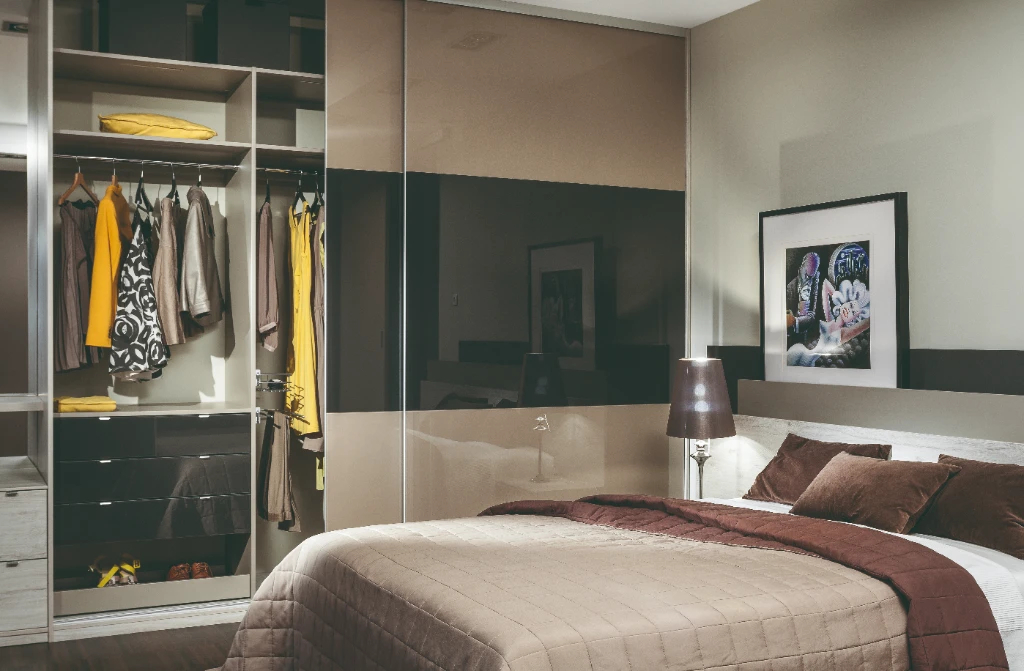
Mirrors are not just practical. In small bedrooms, they bounce light and create the feeling of depth.
- Mirrored doors to reflect natural light
- A tall mirror opposite a window where possible
- Light, calm finishes to reduce visual noise
- Wall lighting to free up bedside surfaces
Reflective surfaces and wall mounted lighting are commonly recommended for making small bedrooms feel bigger and less cluttered.
Plan the Inside Before You Plan the Outside
A small bedroom wardrobe only works if the internals match your routine. Otherwise you end up adding drawers, baskets, and extra storage around the room, which defeats the purpose.
- Double hanging for shorter items to increase capacity
- A dedicated long hanging section only if you truly need it
- Drawers for folded items so shelves stay tidy
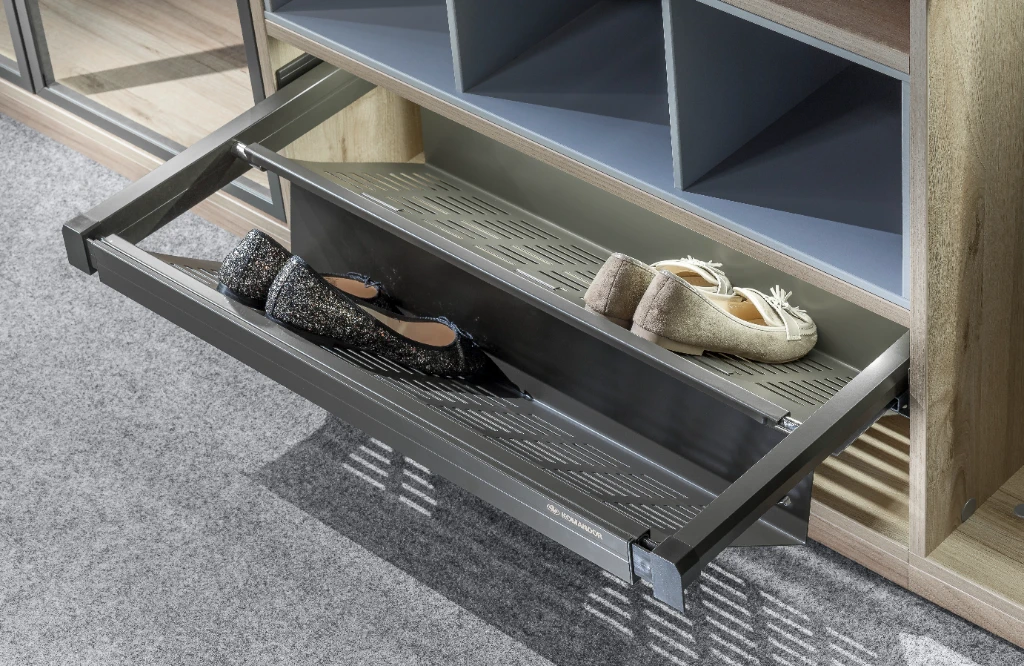
- Shoe storage that keeps pairs visible and easy to grab
Fitted wardrobe advice often stresses the importance of planning usable internal space, especially in awkward or restricted layouts.
Use Corners, Alcoves, and Dead Space Properly
Small bedrooms often come with quirks. Alcoves, chimney breasts, sloped ceilings. These can be frustrating with standard furniture, but they are usually where made to measure storage shines.
- Use alcoves for drawers or shelves
- Bridge corners to create a single usable run
- Shape storage under sloped ceilings so every section is reachable
If your bedroom has angles, explore sloped ceiling wardrobes for layout ideas.
Keep the Room Feeling Calm
When the bedroom is small, visual clutter is amplified. A few choices keep things restful.
- Choose a simple finish palette
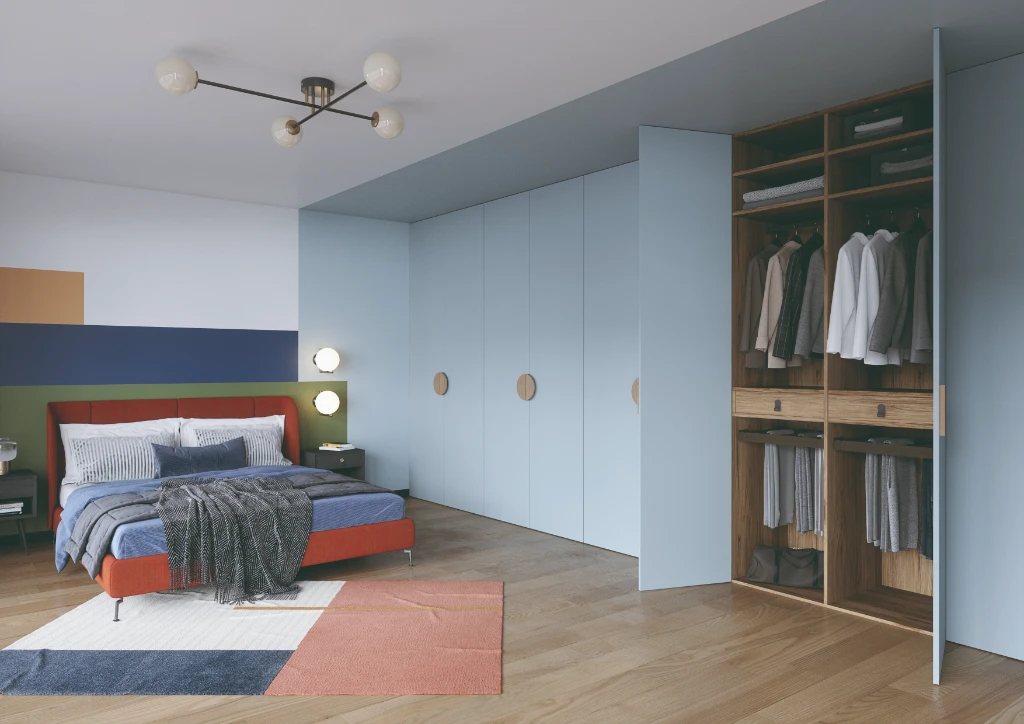
- Keep handles minimal or go handleless
- Balance closed storage with one or two open display areas
- Avoid too many contrasting materials in one wall run
Bring It Together
The best small bedroom wardrobes do two things. They free up floor space, and they reduce the need for extra storage furniture. Once that happens, the whole room feels lighter.